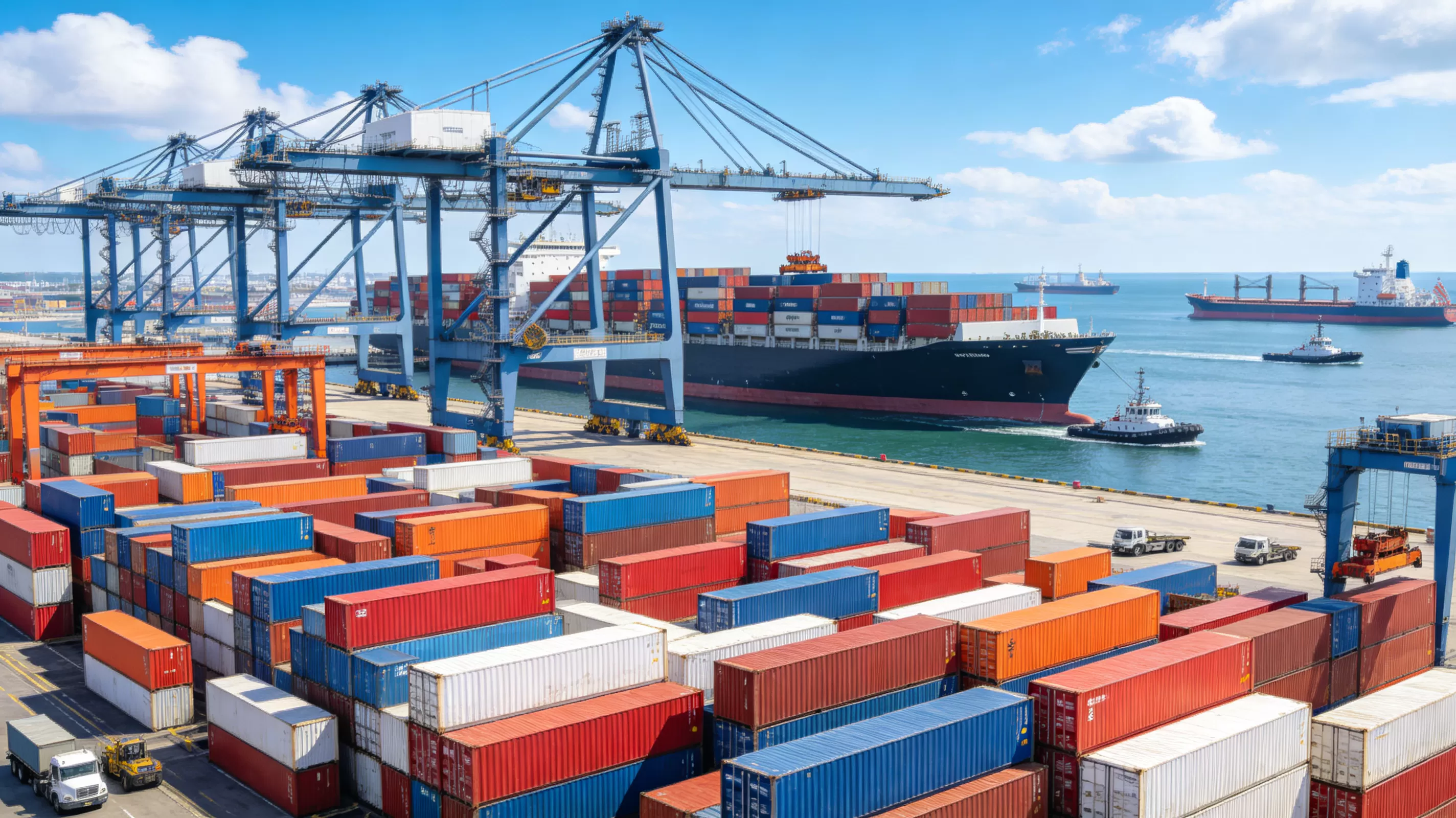
The contract extension between ILWU Local 26 and the Pacific Maritime Association expires at 5 p.m. Pacific Time today, November 4, 2026. No strike has been confirmed. No deal has been announced. What remains is a narrow window for shippers with cargo at the San Pedro Bay port complex to act before the situation resolves one way or the other—and the consequences of a work stoppage would reach far beyond the 250 workers at the center of the dispute.
1. What Is Actually at Stake at 5 P.M. Today
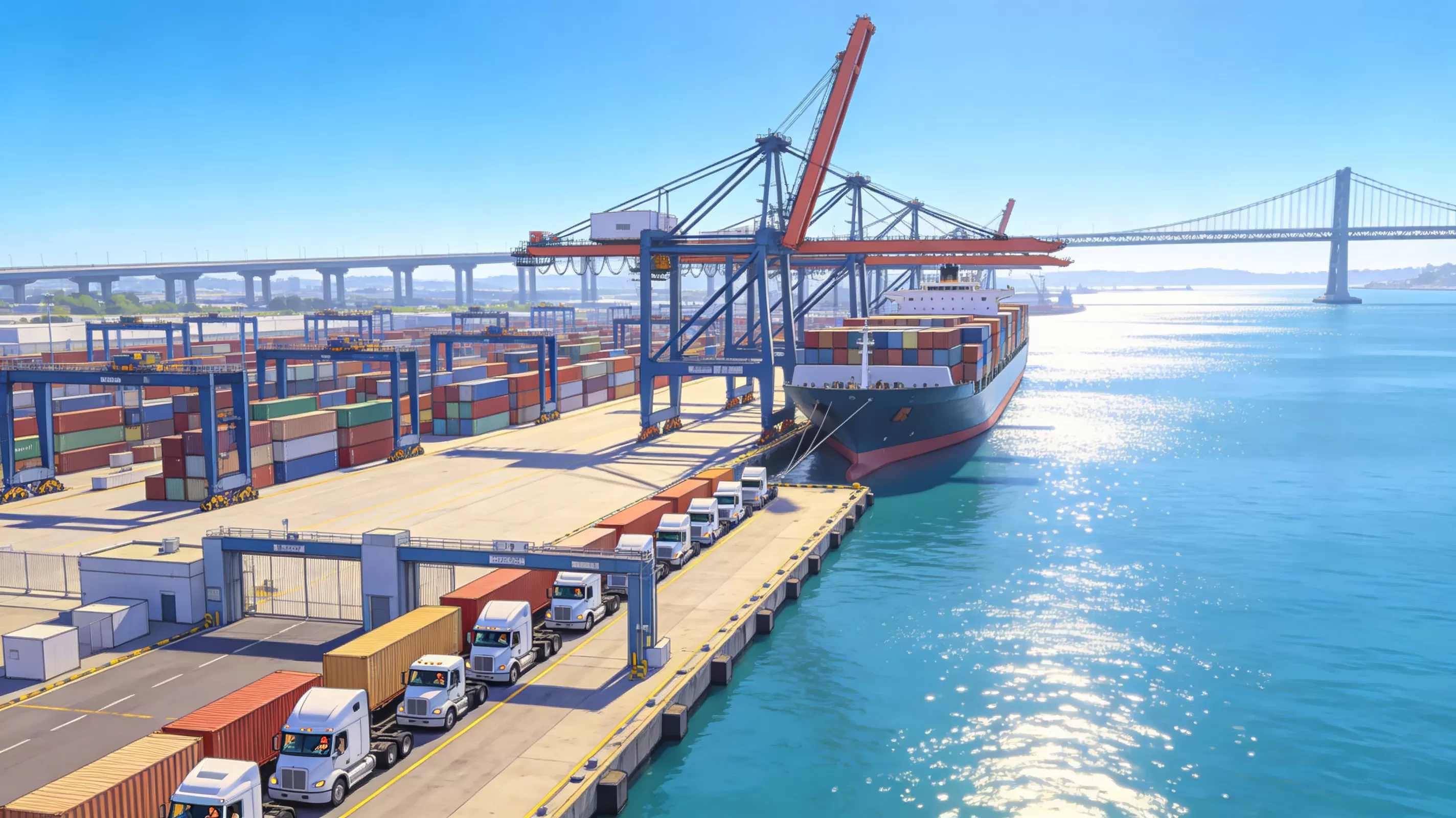
The dispute involves approximately 250 port watchmen represented by ILWU Local 26, who handle gate security and cargo watch at six container terminals in Los Angeles and Long Beach, including facilities operated by APM Terminals, Long Beach Container Terminal, Total Terminals International, SSA Marine, and Pacific Container Terminal. Negotiations with the Pacific Maritime Association have been underway for over a year, with the original contract having expired in July 2025 and operations continuing under successive extensions.
The current extension, agreed on October 30, pushed the deadline from November 1 to 5 p.m. PT on November 4. The Federal Mediation and Conciliation Service is assisting the talks.
The critical detail is not the size of the workforce. It is where they work. According to PMA data, the terminals employing these watchmen handle approximately 85% of all container cargo at the Port of Long Beach and 33% at the Port of Los Angeles . Together, the two ports account for roughly one-third of U.S. seaborne containerized trade.
And the impact would not be confined to gate security. Industry consultant Lars Jensen noted that other ILWU members—dockworkers and marine clerks who are not party to the dispute—are expected to honor picket lines. That could bring vessel, yard, and gate operations at the affected terminals to a standstill.
2. Why Even a Short Stoppage Would Be Difficult to Absorb
The San Pedro Bay complex is not entering this deadline with spare capacity. It is handling record volumes at the same time that inland connections are already strained.
LA/LB processed an average of 68,000 TEU per day in September, according to Jensen—a pace at which even a brief interruption can quickly generate landside trucking bottlenecks and vessel delays.
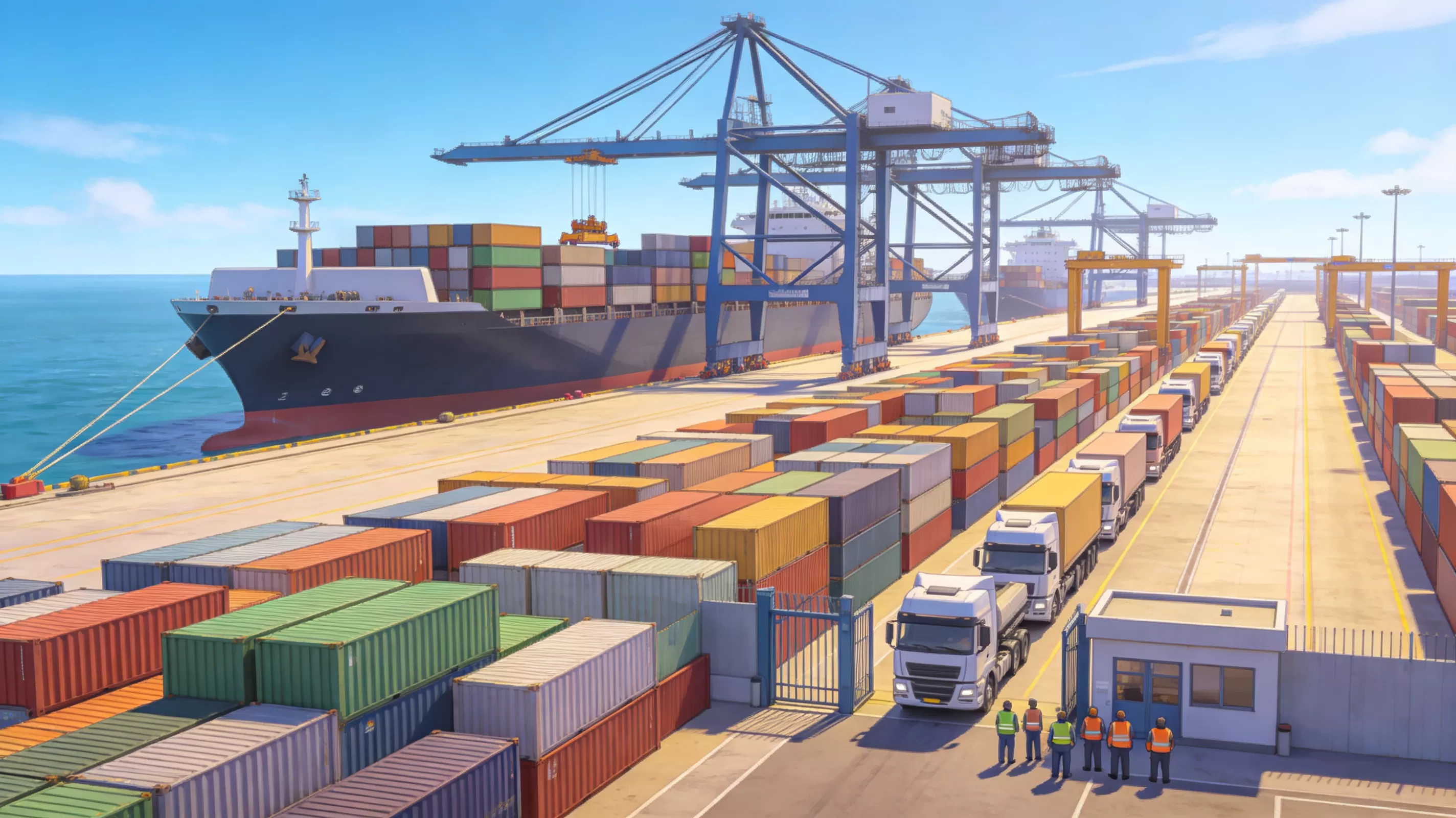
Inland rail is already backed up. CargoTrans reported approximately 35,700 containers awaiting rail transportation, including around 10,500 that had been at terminals for nine days or longer . That backlog means cargo released from terminals has nowhere to go quickly, and a strike would compound a congestion problem that already exists.
A major road closure begins three days from now. The Vincent Thomas Bridge, a key link between San Pedro and Terminal Island, is scheduled to close for approximately 16 months starting November 7, 2026, for a deck replacement project. Caltrans data indicates the bridge carries about 53,000 vehicles daily, with heavy trucks making up nearly 9% of that traffic. The Port of Los Angeles notes that drayage trucks represent about 8% of port complex drayage traffic on the bridge, and detours will add time to truck journeys through the port area.
The policy backdrop adds a timing variable. The current suspension of Section 301 port fees on China-linked maritime services is scheduled to expire on November 9, 2026, though USTR has proposed a two-month extension through January 9, 2027. That proposed extension is not yet finalized, and the proximity of the November 9 date means some shippers may be adjusting shipment timing around it independently of the labor situation.
3. What Shippers with Cargo at LA/LB Should Do Before 5 P.M.
The window for preventive action is measured in hours. The following steps are actionable today.
Collect released cargo before the deadline. If you have containers that have cleared customs and are available for pickup at affected terminals, arrange drayage before 5 p.m. Pacific Time. Industry guidance issued earlier this week explicitly advised collecting household goods and consolidated containers before the deadline.
Confirm vessel and terminal status directly. Do not rely on published schedules. Ask your carrier or forwarder whether your vessel is at an affected terminal, whether any diversion has been announced, and how demurrage and detention will be handled if a stoppage occurs.
For time-sensitive freight, evaluate alternatives now—not after a strike is confirmed. Market intelligence indicates increased requests for contingency planning from customers with time-sensitive cargo, particularly those evaluating alternative gateways and air options. The practical difficulty is that alternative capacity tightens quickly once a disruption is confirmed. Shippers who begin that evaluation today have more options than those who begin tomorrow.
Build the bridge closure into drayage planning regardless of the labor outcome. Even if a strike is averted, the Vincent Thomas Bridge closure begins November 7 and will last 16 months. Trucks will be detoured primarily via Interstates 710 and 110, State Route 103, and Harry Bridges Boulevard, with traffic control officers deployed at 18 key intersections. Drayage schedules that worked in October may not work in December.
Communicate revised expectations to customers. If your delivery commitments assume normal LA/LB throughput, they are at risk for the next several weeks—whether from a strike, from the bridge closure, from inland rail congestion, or from some combination of the three.
4. The Longer View: A Port Complex Under Compounding Pressure
The November 4 deadline is not an isolated event. It arrives at a moment when the San Pedro Bay complex is absorbing multiple simultaneous constraints: record container volumes, a rail network already holding tens of thousands of containers, a major bridge closure beginning in three days, and a labor dispute that has been running on extensions for more than a year.
The structure of this particular dispute is what makes it consequential. A relatively small workforce at strategically critical gate and security positions can, through the mechanics of picket-line solidarity, affect the majority of container flow at the busiest port complex in the United States. That is a vulnerability that exists independently of the size of the bargaining unit.
For shippers, the practical lesson is not to predict whether a strike will begin at 5 p.m. today. It is to recognize that the recovery period from any disruption at LA/LB will be longer than the disruption itself, because the system has no slack to absorb a shock. A one-day stoppage does not produce a one-day delay; it produces a queue that must be worked through against a backdrop of rail congestion and road detours.
Glovoyce is monitoring the 5 p.m. PT deadline and will update clients as soon as the status is confirmed. If you have cargo at an affected terminal and have not yet confirmed collection or contingency arrangements, contact your account manager immediately.
This article is based on ILWU Local 26 and PMA statements, industry advisories, Caltrans and Port of Los Angeles information, and USTR notices as of November 4, 2026. The labor situation is unresolved at the time of publication; confirm current status before making commitments.