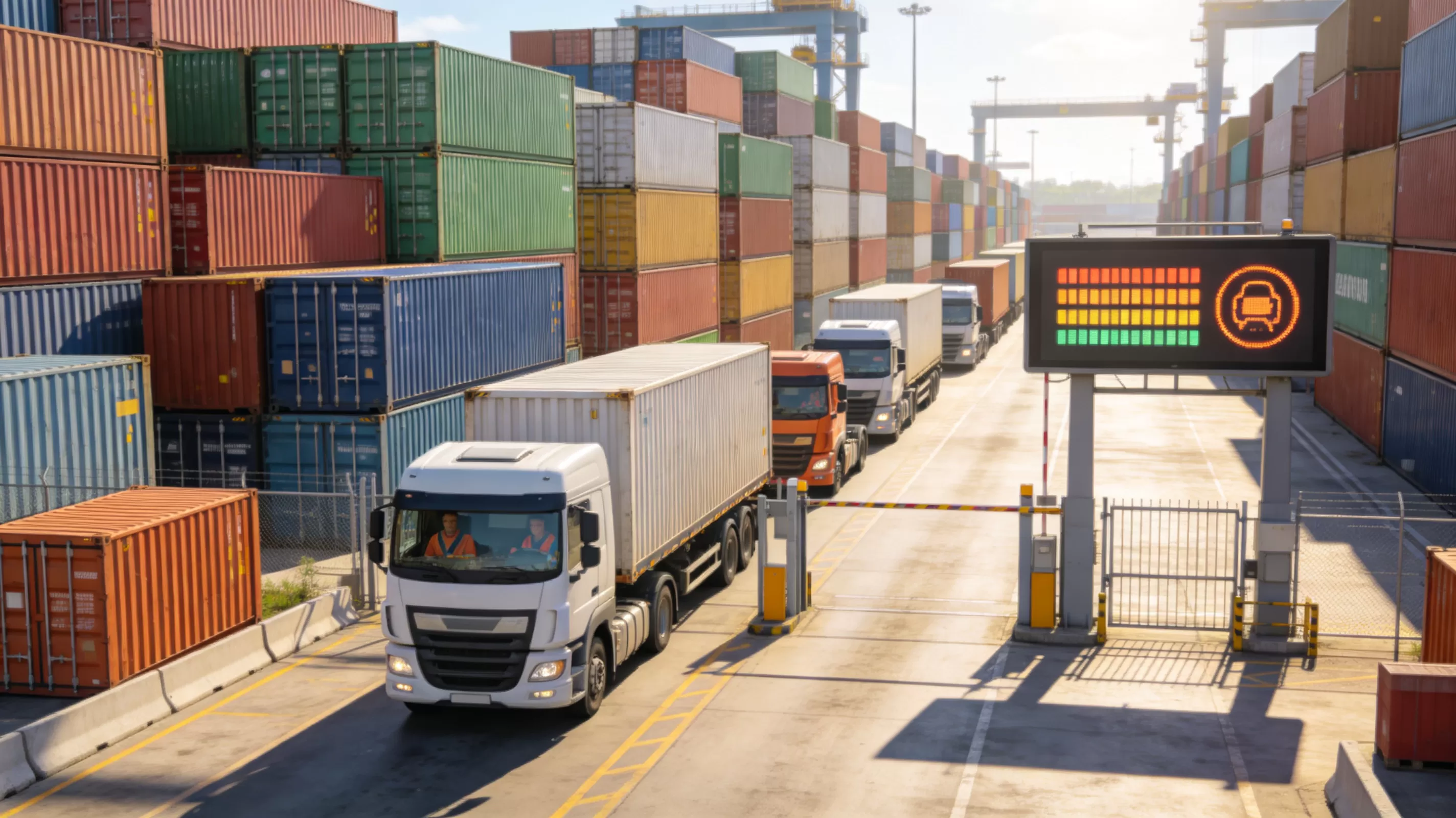
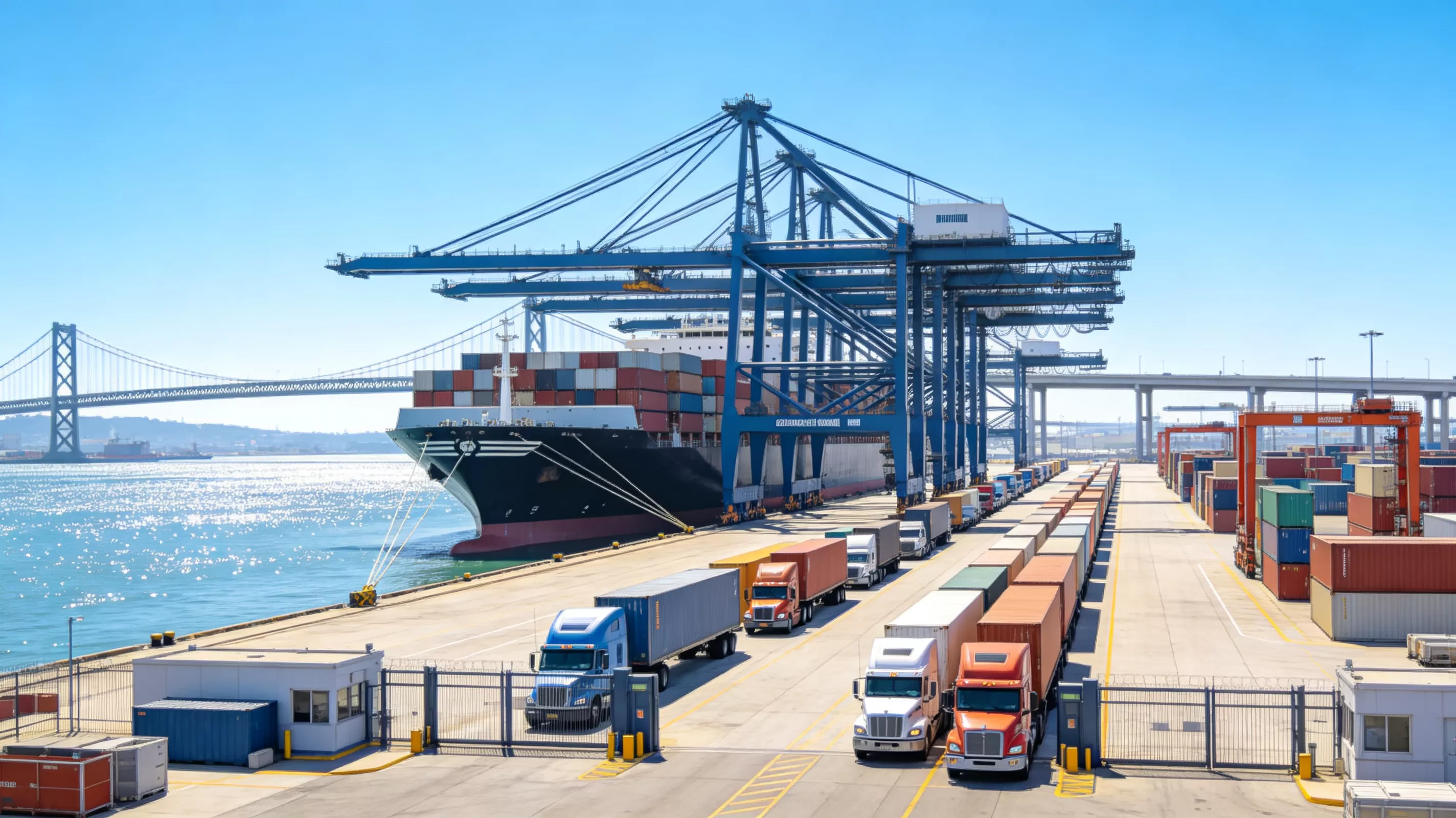
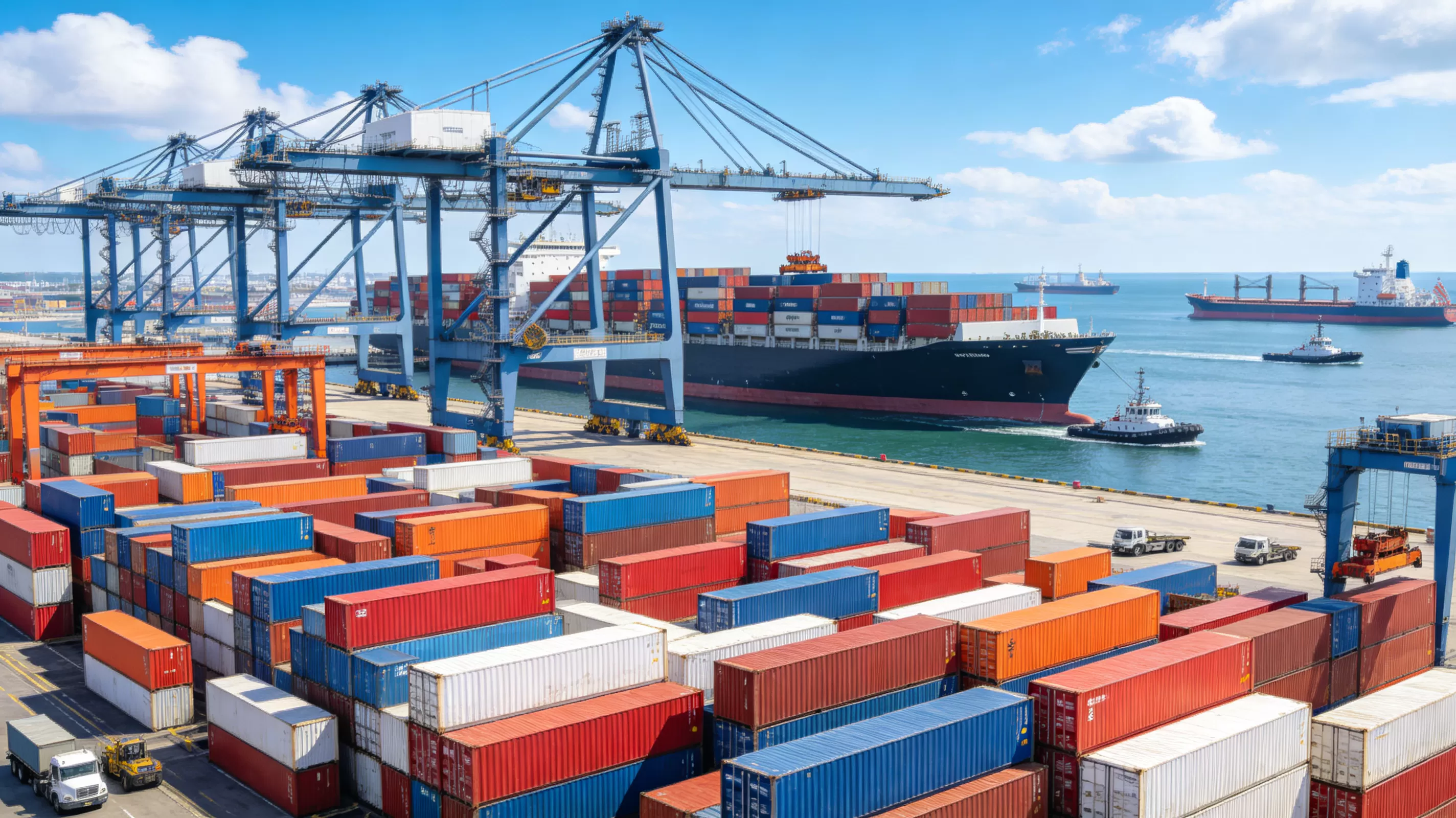
In less than 48 hours, dockworkers across more than 50 ports in Europe, the Mediterranean and beyond are set to stage coordinated industrial action. The stoppage is planned for a single day, but its consequences will not be contained to 24 hours. Arriving as it does against a backdrop of already severe congestion at Antwerp, Rotterdam and Hamburg, the action threatens to convert a difficult peak season into a broken delivery schedule for shippers racing year-end inventory deadlines.
1. What Is Happening: A Coordinated Stoppage, Not a Local Dispute
The action on 30 October is being organised by the international union network Ports in Action, with unions and dockworkers in France, Greece, Spain, Turkey, Morocco and Italy preparing to participate. Support has also been reported from northern Europe, including Germany’s ver.di union in Hamburg, as well as from India, Mexico and the United States.
The geographic spread is unusually wide. Ports potentially affected include Hamburg, Genoa, Livorno, Gioia Tauro, Marseille, Piraeus, Tangier, Mersin and Veracruz. In Italy, the transport ministry has formally registered a nationwide 24-hour port workers’ strike for 30 October, covering Genoa, Livorno, Trieste, Civitavecchia, Ancona, Ravenna and Gioia Tauro, among others.
The stated objectives are political as much as industrial. Unions are seeking to prevent ports from being used for arms shipments and to oppose the movement of weapons, ammunition and military equipment to conflict zones, following a meeting of European and Mediterranean dockworkers’ unions in Istanbul in May.
Not every port will stop work in the same way. Some locations are expected to face full walkouts; others will hold demonstrations rather than complete operational stoppages. That variation matters for shippers: the operational impact will be port-specific, not uniform.
2. The Real Risk: Why One Day Can Disrupt Several Weeks
The temptation is to treat a 24-hour stoppage as a minor inconvenience. In the current European port environment, that assumption is dangerous.
A single missed berthing window is not simply recovered the next day. Once a vessel is delayed, the entire rotation behind it must be re-sequenced. Shipping line Hapag-Lloyd has warned that even a 24-hour stoppage could push vessel schedules back by three to five days, because a missed berth forces the vessel and every subsequent port call to be re-slotted.
That delay then collides with an already saturated system. Current waiting times at major European gateways are far above normal:
| Port |
Current delay / waiting time |
Operational context |
| Antwerp |
2–4 days |
Yard utilisation around 90%; pilots’ strike suspended but labour tensions unresolved |
| Rotterdam |
2–8 days |
Lashing workers’ strike disrupted terminal operations; ECT yard occupancy at 93% |
| Hamburg |
5–7 days |
Port congestion compounded by inland transport bottlenecks |
| Piraeus / Genoa / Valencia |
3–7 days |
Yard tightness and reduced operational efficiency |
Sources: Kuehne+Nagel operational updates and market summaries, October 2026.
A system with no spare berth capacity cannot absorb a coordinated stoppage without cascading delays. The day of action does not create the congestion; it accelerates and concentrates it. Vessels that miss their slots on 30 October will join an already long queue, and cargo that was scheduled to move in early November will be pushed into a week that is already forecast to face post-typhoon backlogs from Asia and the residual effects of recent storms in Northern Europe.
3. The Wider Backdrop: A Fragile Network, Not a Single Shock
The 30 October action is not occurring in isolation. It lands on a European logistics network that is already absorbing multiple simultaneous pressures.
Storm disruption in Northern Europe. Severe weather over the weekend of 24–26 October forced Rotterdam’s deep-sea terminals to suspend operations, with Delta II shutting down entirely on the evening of 23 October. Antwerp restricted bunkering in certain zones. Wind speeds exceeded 130 km/h in parts of Northern Europe, and wave heights in the Bay of Biscay reached up to 12 metres. Although winds have since eased, the backlog from those closures is still being cleared.
The Le Havre IT failure. The Normandy terminal at Le Havre has faced severe IT system disruption since 13 October, with container gate operations and handling largely stalled and no confirmed full recovery date as of 23 October. This removes a key northern gateway from normal service just as shippers need alternatives.
Rhine low water. Although autumn levels have recovered from the extreme lows of summer, when the Kaub gauge fell to 8 centimetres and barge capacity dropped by more than 55%, inland waterway restrictions persist into late autumn, keeping pressure on the corridor linking German industrial centres to Rotterdam and Antwerp.
The cumulative effect is that the buffer has already been consumed. A strike that would be manageable in a normal week becomes materially more disruptive when yards are full, inland connections are constrained and alternative gateways are themselves compromised.
4. What Is Actually at Stake for Shippers
The immediate operational risks are straightforward, but their commercial consequences are not.
Schedule reliability collapses first. Vessels omitted from a port, or delayed by a missed berth, will produce rollovers and revised arrival estimates. For shippers with fixed delivery commitments, a three-to-five-day schedule push can mean missed retail windows, expired promotional slots or contractual penalties.
Equipment and inland connections tighten. A stoppage at a container terminal does not stop the inland trucking and rail system from continuing to arrive. The result is often a surge of containers and trailers competing for limited yard space once operations resume, extending dwell times beyond the strike itself.
Costs migrate to the shipper. Demurrage, detention and storage charges accumulate while cargo waits. Re-routing or re-booking may carry amendment fees and higher spot rates. And in a market where capacity is already being managed through blank sailings, last-minute replacement space is both scarcer and more expensive.
The compounding effect is the real threat. A shipper who has already absorbed delays from the October storms, the Le Havre IT outage or Asian typhoon backlogs has no remaining slack. The 30 October action may be the event that turns a tight schedule into a missed one.
5. Immediate Actions for Shippers with Europe-Bound Cargo
The window for preventive action is measured in hours, not weeks. The following steps should be taken now.
Confirm the status of every shipment arriving at or departing from an affected port between 29 October and 5 November. Ask your carrier or forwarder directly whether the vessel has been omitted, re-routed or rescheduled. Do not rely on published schedules alone; they will lag the operational reality.
Identify cargo that can be diverted before it reaches the affected gateway. For time-sensitive consignments, evaluate discharge at an alternative port with onward rail or truck movement, or switching to air or rail where the cost is justified by the delivery commitment.
Secure space on the next available sailing before the backlog forms. Once the stoppage ends, the race for berth slots and feeder connections will intensify. Shippers who wait for certainty will be competing with everyone else who waited.
Quantify your exposure to port storage and detention. Where cargo is already on the water and cannot be diverted, confirm free-time arrangements and be prepared to negotiate charges proactively rather than after the fact.
Build a buffer into customer promises. If your delivery commitments assume normal European port performance, they are no longer realistic for early November. Adjust internal and external expectations now.
Glovoyce Observation
The 30 October action is a reminder that European port risk is no longer episodic. Storm closures, IT failures, low water and labour action are arriving in overlapping sequence, not as isolated events with recovery periods in between. A network that was designed for normal variation is being tested against a cluster of disruptions that leave no time to reset.
For shippers, the practical lesson is not to predict which single event will cause the next delay, but to build logistics plans that assume at least one gateway will be impaired at any given time. That means confirmed alternative routings before they are needed, visibility into port-level operational status rather than only vessel schedules, and a logistics partner who can act on that information while there is still time to act.
Glovoyce is monitoring the 30 October action port by port and will update clients as operational impacts become clear. If you have cargo exposed to the affected gateways and have not yet reviewed contingency options, contact your account manager now.
This article is based on union announcements, Kuehne+Nagel operational updates, carrier advisories and publicly available reporting as of 28 October 2026. Port conditions and strike participation can change at short notice; confirm current status with your Glovoyce account manager before making commitments.